Da Silva shares journey from Brazil to first-generation college student
Published 5:18 am Wednesday, October 28, 2026
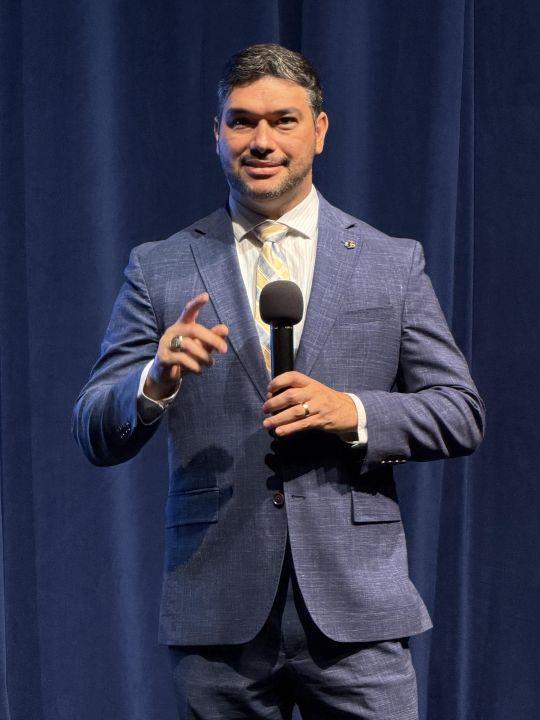
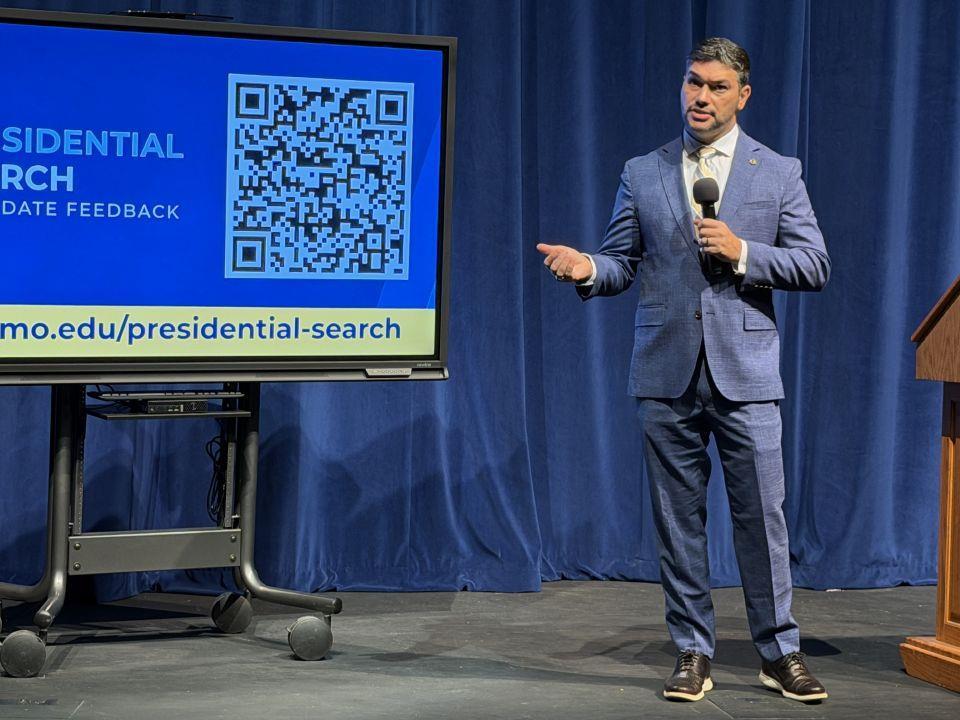
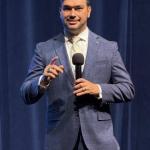
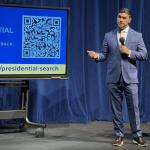
State Fair Community College presidential candidate Jose da Silva emphasized student success, community involvement and building relationships with faculty and staff during a public forum Tuesday at the Stauffacher Theatre.
Da Silva, vice president for Strategic Enrollment Management and Student Success at Southwest Tennessee Community College, was the second of four finalists to visit the Sedalia campus as part of the college’s presidential search.
During his opening remarks Tuesday, Oct. 27, da Silva shared his journey from Brazil to the United States, where he moved at age 11, and his experience as a first-generation college student. Before entering higher education, he worked construction, roofing and warehouse jobs before deciding to pursue a college degree at Tallahassee Community College in Florida.
That experience shaped his approach to community college leadership and his commitment to helping students navigate higher education.
“When I got accepted to Tallahassee Community College, I jumped up and down because I got, yeah, accepted to community college,” da Silva said. “Not realizing that we’re open access.”
He explained that first-generation students may not understand the college application process or know how to navigate campus life, even after enrolling.
“They want to come to college, but they don’t necessarily know how to navigate that,” da Silva said. “And it’s incumbent upon us to ease that process.”
Da Silva earned his associate degree at Tallahassee Community College before transferring to Florida State University, where he earned his bachelor’s and master’s degrees. He later earned a doctorate from the University of North Texas.
His career has included leadership positions at community colleges and universities in Texas, Washington, Illinois and Tennessee. He said working in different higher education systems has given him a broad perspective on student success and institutional leadership.
Da Silva said he would not arrive at SFCC intending to overhaul existing programs, pointing to the college’s recent enrollment growth and graduation rate of 44%.
“I would want to come in and say, OK, you all have been doing a phenomenal job,” da Silva said. “How can I pick up the baton and keep running with you all?”
He said he would use his experience to identify opportunities for improvement while working with college employees to build on existing successes.
Da Silva also described community involvement as an essential part of a college president’s responsibilities. During his time as a vice president, he served on local chambers of commerce and economic development boards, helping build partnerships, advocate for the institutions and secure support for students.
He said fundraising is not always about money, but also about gaining community support and obtaining donated goods, time and services that benefit students.
“My wife and I are very big on integrating ourselves into the community,” da Silva said.
Da Silva and his wife, who also works in higher education, have three children. He said they are being deliberate about their next career move and are looking for a community where their family can establish long-term roots.
“We are looking for a place where they share the same community values that we have, the same family values that we have,” da Silva said.
He added that he and his family are not looking at SFCC as a stepping stone to another position.
“We are looking for a place where we potentially will move to and grow roots where our children can grow,” da Silva said.
If selected, da Silva said he would make visibility and personal relationships priorities. He described setting aside time each week to leave his office, walk around campus and talk with students, faculty and staff.
“I like to get to know people on a personal level,” he said, explaining that learning about employees’ families and personal lives helps build trust.
“If we are to succeed, you know, there’s a saying it takes a village to raise a child or it takes an entire college to make sure that students succeed,” da Silva said.
Da Silva also stressed the importance of shared governance and creating an environment where employees feel comfortable questioning decisions and offering different perspectives.
He said he does not expect to have all the answers and believes difficult conversations are necessary to make the best decisions for students.
“I would be the first one to tell you I don’t have all the answers,” da Silva said. “That’s why we all need to work together collectively.”
Although he believes decisions ultimately must be made, da Silva said employees should understand the reasoning behind them. He also described himself as a data-focused leader who supports transparency and open communication.
During a question about career readiness and workforce partnerships, da Silva described a student employment initiative he helped develop at the University of Texas at Dallas.
The Trailblazer Ambassador Program worked with campus departments to identify paid student positions and connect students with jobs related to their academic and career interests.
Rather than simply filling openings, the program matched students with departments where they could gain relevant experience. Da Silva said the initiative filled 37 student employment positions during its first year.
He also advocated for paid internships, drawing on his own experience as a low-income college student.
“I’m a huge proponent of internships, but not just getting students internships, but paid internships,” da Silva said.
He explained that unpaid internships can be impractical for students who must work to support themselves while attending college.
Throughout the forum, da Silva returned to the idea that community colleges should make education accessible while helping students develop the skills, relationships and experience needed to succeed beyond graduation.
The college is hosting four finalists for public forums and community social hours Oct. 26-29. The events give students, employees and community members opportunities to meet the candidates and provide feedback to the Board of Trustees as it considers its next president.
Feedback can be submitted to https://www.sfccmo.edu/about/presidential-search/.
Chris Howell can be reached at 660-530-0146.