Sedalia police chief defends use of Flock cameras during council meeting
Published 4:03 am Wednesday, November 11, 2026



|
Getting your Trinity Audio player ready...
|
Sedalia Police Chief David Woolery defended the Police Department’s use of Flock automated license plate reader cameras Monday, Nov. 9, telling City Council members the technology has helped solve crimes while emphasizing safeguards are in place to protect citizens’ privacy.
During a special Sedalia City Council, Woolery gave a presentation explaining how the cameras operate, how officers access information and what policies govern their use.
The presentation came amid growing public concerns about automated license plate readers, particularly regarding surveillance, data sharing and potential misuse.
“First off, I’d like to start by saying, the Sedalia Police Department will always operate within the law,” Woolery said. “We always have, and we always will.”
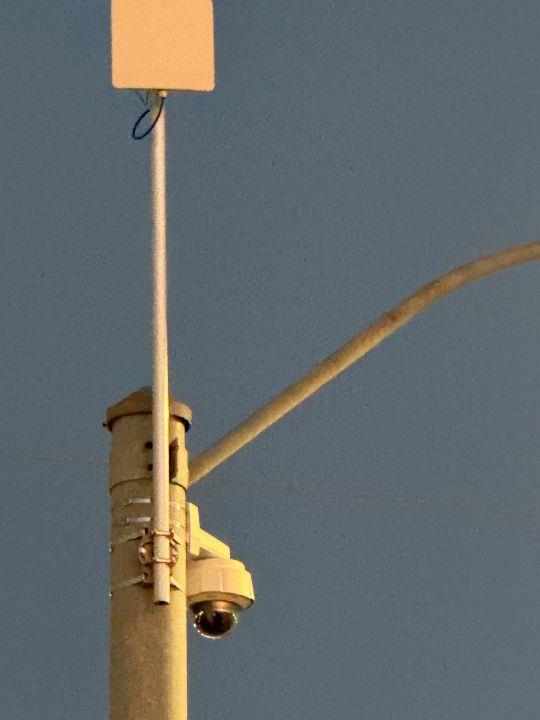
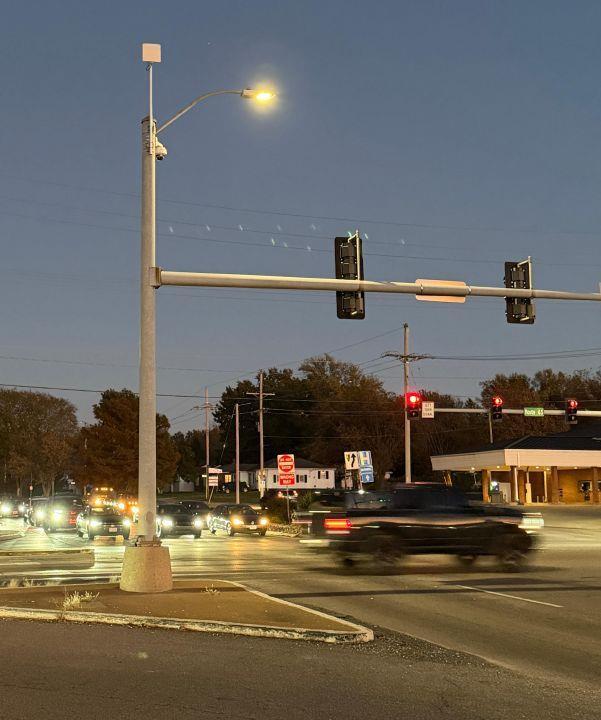
Sedalia currently operates 11 Flock automated license plate reader cameras and three additional Flock cameras known as Condors, which provide stationary video surveillance at selected intersections and locations.
The license plate reader program was originally proposed in the department’s 2024 Strategic Plan, presented to council in 2023. The council has continued funding the system through the fiscal year 2025, 2026 and 2027 budgets.
Woolery explained that the cameras photograph vehicles passing through their fields of view, capturing license plate information, vehicle characteristics, and the time and location of the image. The information is encrypted and uploaded to Flock’s secure platform, where authorized officers can search records and receive alerts about vehicles of interest.
He stressed that the cameras do not use facial recognition, collect biometric information, monitor cellphones, intercept communications or provide continuous GPS tracking.
“They’re not designed to identify individuals,” Woolery said.
Flock data is automatically deleted after 30 days, and the company’s contract prohibits selling the information to third parties, he said.
Officers must complete training before receiving access to the system. Every search must be connected to an active investigation or department-approved training and include an offense type, case number and explanation for the inquiry.
The department conducts daily audits of Flock searches, with a weekly report provided by Commander Elwood.
Woolery said the department strengthened its search requirements after reviewing public concerns and examining its auditing procedures.
“One of the pieces we were missing, that I think a lot of agencies do miss, is requiring that case number,” he said.
Requiring a case number makes it easier for command staff to determine whether a search was legitimate and connected to an actual investigation.
Flock also conducts its own audits and flags searches that meet certain criteria for additional review.
Woolery compared the safeguards to those governing other law enforcement databases, including the Missouri Uniform Law Enforcement System and the National Crime Information Center. He said information obtained through Flock must be verified before officers take enforcement action.
The chief presented two local investigations in which the technology helped officers.
In one case, an elderly Sedalia woman unexpectedly left her residence, prompting her family to report her missing. The circumstances qualified for a Silver Alert.
Officers activated an alert for her vehicle through Flock and discovered she had traveled to Springfield. Although officers were unable to intercept her there, information from the system helped law enforcement coordinate with agencies in Arkansas, where she was eventually located and reunited with her family.
In another case, a woman was robbed while withdrawing money from an ATM near 14th Street and Limit Avenue. A bystander who intervened on her behalf was assaulted, and the suspect fled.
Surveillance footage showed the suspect leaving in a dark sedan with a missing hubcap. Investigators had only a partial license plate number.
Officers used Flock to identify the vehicle. Within an hour and 20 minutes of the robbery, they located it and arrested the suspect, who confessed to the crime.
The suspect later pleaded guilty to second-degree robbery and was sentenced to seven years in the Missouri Department of Corrections.
“Flock does not make that case,” Woolery said. “It is a piece of the puzzle. But sometimes, a very important piece.”
Woolery also discussed court decisions involving automated license plate readers, including cases from the Fifth and Eighth U.S. Circuit Courts of Appeals and a January 2026 federal court decision involving Norfolk, Virginia.
He said those decisions generally found that limited collection of vehicle information on public roads did not constitute an unreasonable search under the Fourth Amendment in the circumstances presented.
Woolery acknowledged that laws and court interpretations can change, citing a 2009 U.S. Supreme Court decision that restricted when officers could search a vehicle following an arrest.
“What cannot change is our rights guaranteed under the U.S. Constitution,” Woolery said. “It is our sworn oath and greatest responsibility to protect those rights in all situations.”
He said he hopes the U.S. Supreme Court eventually issues a ruling specifically addressing automated license plate readers.
Woolery told council the department is in compliance with Missouri Gov. Mike Kehoe’s Executive Order 26-18, signed Sept. 16. The order establishes restrictions on automated license plate reader information, including 30-day data deletion requirements, restrictions on third-party commercial use and prohibitions involving facial recognition.
Woolery said he signed a confirmation letter to the governor’s office verifying the department’s compliance.
During questions from council members and residents, Woolery explained that other law enforcement agencies with access to the Flock system can search Sedalia’s information, but those searches are expected to be connected to legitimate investigations.
He said private businesses, including Lowe’s locations that operate their own Flock cameras, may share footage with law enforcement. However, Sedalia police do not share department information with private companies.
Residents also asked about public access to information obtained through the system. Woolery said specific Flock records are not automatically available to the public, but information documented in a police report could potentially be released under Missouri’s Sunshine Law, depending on the circumstances.
Council members also discussed whether the three Condor cameras remain necessary. One was installed near Main Street and Missouri Avenue to monitor railroad tracks when a bridge was out of service.
Woolery said the department is considering whether to relocate that camera to a park or another area experiencing increased police calls.
The three Condor cameras cost approximately $10,500 annually, while the 11 license plate reader cameras cost approximately $33,000 per year.
Woolery said the department would review camera locations and expenses during its next strategic planning and budget discussions. He noted that the Main Street camera also captured important evidence related to a recent shooting.
At the conclusion of the presentation, a resident raised additional concerns about Flock and the city’s spending priorities.
One resident came to the podium and cited reports of communities across the country discontinuing their Flock contracts over privacy and surveillance concerns, including allegations of law enforcement misuse. She referenced a Newsweek article reportedly identifying 149 cities pushing back against the technology.
The resident mentioned Sedalia’s high crime rate, citing NeighborhoodScout statistics, and described concerns about nighttime activity and attempted vehicle break-ins in residential neighborhoods.
Woolery’s presentation provided council members and residents an overview of the department’s policies and investigative uses as questions about surveillance, privacy and public safety continue.
Monday’s presentation will be used by the council as they decide whether or not to continue Flock camera usage in Sedalia.
Chris Howell can be reached at 660-530-0146