Missouri school funding uncertainty puts pressure on Sedalia 200, La Monte
Published 9:16 pm Friday, October 9, 2026
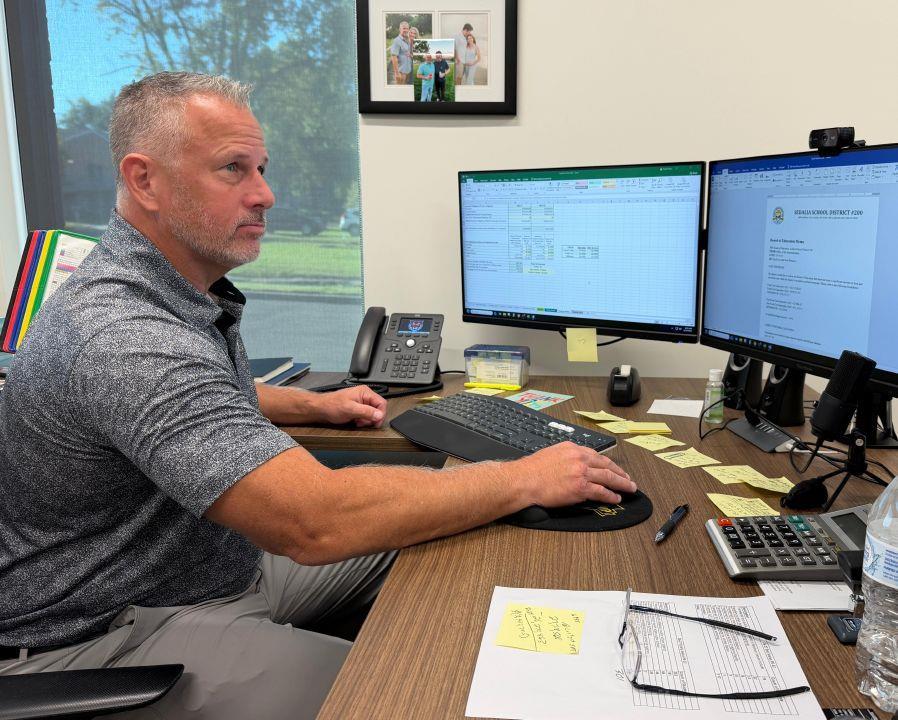
Uncertainty over state funding, rising operating costs and increasing teacher salaries are pressuring school districts across Missouri as administrators plan for the next fiscal year.
Sedalia School District 200 Superintendent Todd Fraley said state officials are projecting a reduction in per-student funding for fiscal year 2028, potentially costing the district approximately $1.5 million compared with current funding levels.
“We don’t know exactly how big of a deal they’re going to be at this point in time,” Fraley said. “Educational leaders across the state of Missouri are in a bit of limbo when it comes to trying to plan for future financial assessment due to that.”
Fraley said Missouri’s State Adequacy Target, the per-student funding figure used in the state’s school funding formula, was paid at $6,958 per student at the end of the last fiscal year. By statute, the target should have been $7,145, he said.
Current projections indicate the state may only be able to provide $6,700 per student in fiscal 2028.
If that projection becomes reality, Sedalia 200 would lose about $1.5 million in state funding compared with what it has been receiving.
The potential reduction comes as the district faces higher transportation, food service and other operating expenses.
“I’m over budget for diesel fuel every year, but I did not over budget to the extent of six, $7 a gallon diesel fuel, certainly,” Fraley said.
Food costs are also increasing. After comparing September expenses with the same month last year, Fraley said the district’s food service costs had risen approximately 15%.
At the same time, the district is carrying more than $163,000 in unpaid student lunch balances.
Fraley acknowledged that asking taxpayers to make up funding shortfalls is not a simple solution, particularly when households are facing their own rising expenses.
“We’re not going to not feed a kid,” Fraley said.
There is some positive news for Sedalia 200’s local revenue. The district’s assessed valuation increased this year, largely because of new construction and a more than $12 million increase in personal property valuation. Real estate valuation actually declined 0.12%, Fraley said.
Assuming all taxes are paid in full, the increase should generate approximately $631,000 in additional local revenue for the district.
However, next year’s property reassessment could change that outlook.
Fraley said Sedalia 200 remains financially stable compared with some districts, with comfortable reserve balances. But those reserves cannot indefinitely cover a widening gap between revenue and expenses.
“We’re nowhere near that level of need,” Fraley said, referring to a district he had read about that expected to borrow money to cover expenses until property tax collections arrive in December and January. “But that can’t sustain, you know, a three- to five-year period. That will go away fairly quickly.”
If funding does not improve, Fraley said, districts will have to consider difficult budget decisions while trying to remain competitive in employee salaries and benefits.
“It’s quite a challenge,” Fraley said.
La Monte R-IV also faces daunting challenges as smaller districts depend more heavily on state funding and are particularly vulnerable to reductions.
La Monte Superintendent James Frank said the district built its current budget around the amount of state funding officials indicated they expected to receive. Payments have since fallen short of those expectations.
Frank estimated the current gap at approximately $150 per student.
The outlook for next year could bring another reduction of a similar amount if the state cannot replace one-time money appropriated by the Legislature to support the funding formula this year.
“Some districts might not hit you very hard, but at La Monte, we have a pretty healthy amount of our funding comes directly from the state, so when they’re short, we definitely feel it,” Frank said.
The potential loss comes as rural schools face increasing costs for transportation, employee salaries and other necessities.
Frank said districts are trying to account for salary increases while also dealing with uncertainty about whether the state will provide the revenue administrators anticipated.
Teacher salary increases are significant, he said, but districts must balance those obligations against available funding.
“If the state’s not going to help fund our schools, we’re going to have to ask our taxpayers to help fund our schools,” Frank said. “Which is not an ideal situation and not definitely the bargain that they probably signed up for either.”
Frank also pointed to changes in gambling revenue as one factor contributing to the state’s budget challenges. He said declining revenue from traditional gambling and differences in the state’s collections from online sports betting could affect funding sources that support schools.
With multiple pressures converging, Frank said school districts have limited control over the revenue they receive from the state.
“Our job is just to show up and educate kids, and we’re trying our best to do that,” Frank said.
For both districts, the coming budget cycle will require administrators to weigh uncertain state revenue against expenses that continue to rise, while trying to protect classroom services and avoid placing additional burdens on local taxpayers.
Chris Howell can be reached at 660-530-0146.