Candidates discuss education, health care, taxes at Sedalia Business Women Forum
Published 11:19 pm Thursday, October 22, 2026
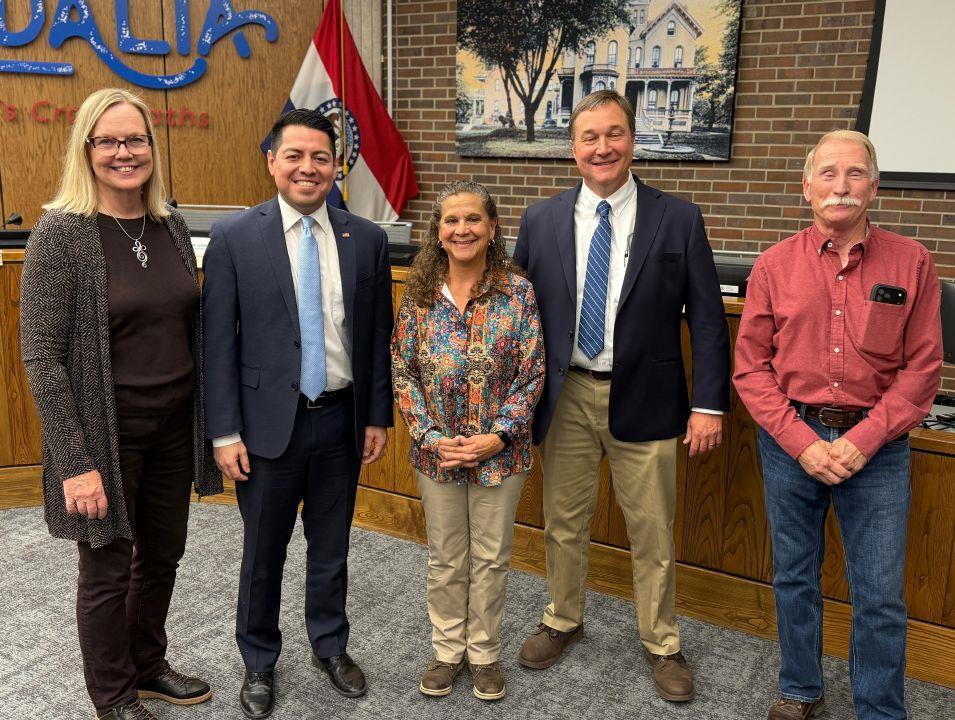
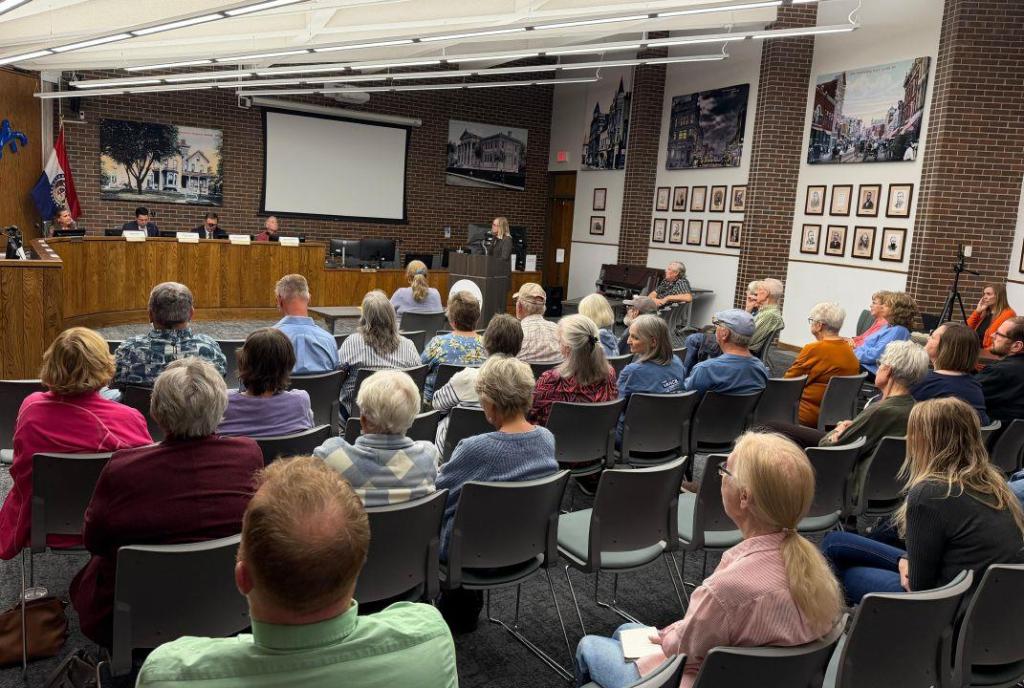
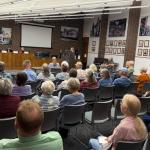
State legislative candidates discussed education funding, rural health care, taxes and protecting agricultural land during a candidate forum hosted by Sedalia Business Women on Wednesday, Oct. 21, in the Sedalia City Council chambers.
The nonpartisan organization invited candidates for Missouri House District 52 and Senate District 28 to answer questions poised by moderator Dianne Simon about issues affecting Missouri and Pettis County ahead of the Nov. 3 general election.
House District 52 candidates Democrat Rene Vance and Republican Israel Baeza participated in the first portion of the forum. Senate District 28 candidates Democrat Mike McCaffrey and Republican Sam Alexander followed.
Candidates for House District 57, which includes portions of Pettis County, were also invited, but Michael Walbaum and Matt Sergent were unable to attend.
Throughout the forum, candidates offered differing views on taxation and state spending while expressing concerns about the future of rural communities, local hospitals and public schools.
Education funding emerged as a major point of discussion, with candidates debating how Missouri should balance its budget while supporting public schools and higher education.
Vance said funding public education would be a priority if she were elected to the House.
“Our legislative body, in the last session or two, has dedicated a total of $60 million towards private schools and or the charter schools,” Vance said. “That goes against the Constitution, but apparently they can do different things and I’m hoping that with the new set of those we can focus our money back on the public education system.”
She added that the state needs to reconsider its education funding formula and explore additional revenue sources.
Baeza said the state should provide school districts with realistic funding projections so administrators can plan their budgets.
“If the state says that this is the amount they’re committed to, the state needs to deliver,” Baeza said. “But the state needs to be honest about what that number is.”
He also said school districts and state government should evaluate spending priorities and focus on student outcomes.
McCaffrey criticized Republican-led tax policies, arguing that tax cuts have reduced revenue available for schools, infrastructure and other public services.
“Part of the reason we’re in the mess we’re in here is because of 12 years of Republican tax cuts that primarily benefit the wealthy,” McCaffrey said.
He pointed to Missouri’s elimination of the capital gains tax and reductions in the state’s individual income tax rate as examples of policies he believes have left the state with fewer resources.
McCaffrey said working families and high-income earners should not necessarily receive the same tax treatment.
“The folks with these kind of incomes do not need another tax cut,” he said, referring to higher-income taxpayers.
Alexander said he supports education but emphasized the need for the state to operate within its available revenue.
“I don’t think it’s fair to cut,” Alexander said. “If you have to cut spending at any point, it needs to be flat and equal straight across the board.”
He said he would consult with school superintendents and education leaders to help determine how best to support districts of different sizes.
Both Senate candidates opposed increasing the sales tax, with McCaffrey arguing that such taxes place a disproportionate burden on working-class residents.
The candidates also addressed concerns about rural hospitals as facilities across Missouri announce service reductions or face financial challenges.
Baeza said lawmakers need to listen to health care professionals and explore ways to recruit more medical providers to rural communities.
He also highlighted the federal Rural Health Transformation Program, saying the funding is important to the future of rural hospitals.
“I think we have to advocate for rural health care,” Baeza said. “Here in Sedalia, it is, I think, the largest employer in our city. It plays a real role.”
Baeza shared his family’s positive experience receiving care at Bothwell Regional Health Center and said community leaders should help promote the hospital’s value.
Vance said maintaining hospital funding and Medicaid support would be essential to keeping local health care available.
“If we do not have a hospital, we are going to lose all of our large manufacturing jobs that are here in the state,” Vance said.
She also emphasized the importance of maintaining access to medical care for seniors and other residents who rely on local providers.
McCaffrey warned that federal Medicaid reductions could create additional financial pressure for rural hospitals. He said patients who lose insurance coverage may delay treatment until they require emergency care, leaving hospitals to absorb more uncompensated costs.
Alexander, a physician, said rural health care will be among the state’s major challenges in the coming years. He said he has worked with hospitals in the Senate district and wants to help facilities improve the care they provide.
“I love taking care of people,” Alexander said. “If you get a good emergency department, you get the confidence of people that they’re willing to come to your hospital.”
Candidates also discussed how state and local governments should respond to proposals for data centers, landfills and large solar developments.
Vance said she opposes eliminating the state’s income tax and wants to protect agricultural land from unwanted development.
She argued that the state must ensure family farms remain viable and that farmers are not overwhelmed by financial pressures.
Baeza said property rights, reducing regulatory burdens and supporting agricultural programs should be priorities.
He also said local governments need more guidance and authority from the state to address large-scale development proposals.
“Counties are an extension of the state, and the counties only have the authority that’s given to them by this state,” Baeza said. “The state needs to step up and put those stipulations into place, so that counties can act.”
Baeza pointed to Pettis County’s moratorium on large-scale economic development as a way to provide time for local officials to prepare for proposed projects.
McCaffrey supported local governments’ efforts to pause development while officials study potential effects on water quality, electricity rates and noise.
“I think it’s smart to put this on hold, take a pause,” McCaffrey said. “Let’s talk to the experts, talk to the scientists, and see what kind of effect these data centers are gonna have.”
Alexander said he helped develop moratoriums that counties have adopted or are considering and wants state lawmakers to do more to protect agricultural land.
He criticized proposals that would bring waste from metropolitan areas into rural communities.
“The thing that I hate seeing on the landfills, the cities, including Kansas City, are loading their trash up and you’re hauling it out here and helping it here in Pettis County,” Alexander said. “And again, that is absolutely not acceptable to me.”
When asked what they would prioritize during their first legislative session, Vance identified public education funding, keeping a hospital in Sedalia and supporting seniors.
She also pledged to hold town halls so constituents could track her work and hold her accountable.
Baeza listed property tax relief, protecting rural communities and property rights, and encouraging economic development by reducing unnecessary regulations.
He said his experience as a Pettis County commissioner would help him work with lawmakers and local officials.
McCaffrey said he wants to address the state’s projected budget deficit and restore funding for essential public services, including schools, hospitals and roads.
Alexander said he wants to bring the concerns of rural residents directly to Jefferson City and give constituents access to their elected representatives.
“We need to have that representation,” Alexander said. “I’ve said this during my campaign the entire time. I wanted Jeff City to tell them that we don’t work for them. They work for us.”
The forum concluded with closing statements from the candidates and a reminder that no-excuse absentee voting had begun ahead of the Nov. 3 election.
Chris Howell can be reached at 660-530-0146.